• About us
    • Back
    • Who we are
    • Careers
    • ESG
    • Accreditations
    • Blog
    • Testimonials
    • Back
  • Total Care
    • Back
    • Total Care

      A unique, all-inclusive package, specially designed for you.
      You pay nothing upfront, and get free installation with 24/7 emergency support, access to myJLA, and remote equipment monitoring for proactive care.

      All for a simple monthly fee.
      Discover Total Care
      JLA Connect
      Total Care is now fully connected
      Remote monitoring from JLA Connect helps you track energy usage, cut downtime and make sure your laundry equipment is running at its best.
      Discover JLA Connect
    • Back
  • Help & advice
    • Back
      • Existing customers

      • Need an engineer?
      • Accounts billing
      • Service & support
      • Energy SMART hub
      • Expert authors
      • myJLA
      • Contact us
      • Manage your account online with MyJLA

        myJLA supports the smooth running of your business, with statements, job sheets, site information and essential documents all in one place.

        Sign in
        Register your interest
    • Back
  • Sectors
    Back
      • Care Homes
      • Contract Cleaners
      • Education
      • Equine & Stables
      • Facilities management
      • Football clubs
      • NHS and Healthcare
      • Health clubs
      • Holiday parks
      • Hotels & spas
      • Housing
      • Launderettes
      • Prisons
      • Pubs & restaurants
      • Public sector
      • Vets & animal care
    Back
  • Energy SMART
  • Knowledge Hub
  • Blog
  • Search
  • MyJLA User Icon
    • Back
    • Manage your account online with MyJLA

      myJLA supports the smooth running of your business, with statements, job sheets, site information and essential documents all in one place.

      Sign in
      Register your interest
    • Back
JLA
  • Laundry
    Back
      • Commercial washing machines
      • Coin-operated washing machines
      • Barrier washers
      • Stacked systems
      • View all commercial washing machines
      • Commercial tumble dryers
      • Coin operated tumble dryers
      • Stackable
      • Safe technology
      • View all commercial tumble dryers
      • Commercial irons
      • Dryer ironers
      • Rotary irons
      • Hand finishing equipment
      • View all commercial Irons
      • Infection control
      • Medical macerators
      • Bedpan washers
      • Air filtration systems
      • View all infection control
      • OTEX
      • Laundry
      • Mould compliance
      • View all OTEX
      • Laundry solutions
      • Contactless laundry equipment
      • Commercial laundry service contracts
      • Managed laundry solutions
    Back
  • Catering
    Back
      • Cooking appliances
      • Commercial ovens
      • Commercial fryers
      • Commercial grills
      • Commercial griddles
      • Commercial hobs
      • Commercial induction
      • Bratt pans
      • Fridges & freezers
      • Commercial fridges
      • Commercial freezers
      • Commercial ice machines
      • Blast chillers
      • Food warmers
      • Bain Maries
      • Hot Cupboards
      • View all food warmers
      • Dish & glasswashers
      • Commercial Dishwashers
      • Glasswashers
      • Utensil washers
      • Catering solutions
      • Commercial kitchen installation
      • Kitchen furniture
    Back
  • HVAC
    Back
      • Heating
      • Boilers
      • Wall mounted
      • Floor standing
      • Hybrid heating systems
      • Commercial boiler service contracts
      • Total care for heating
      • View all heating
      • Hot water
      • Hot water cylinders
      • Water storage heaters
      • Sterile equipment services
      • Air conditioning
      • Commercial air conditioning
      • Commercial air conditioning service contracts
      • Air handling units
      • Cellar cooling systems
      • Total Care for air conditioning
    Back
  • Fire & building services
    Back
      • Fire
      • Emergency lighting
      • Fire extinguishers
      • Fire alarms
      • AOV systems
      • View all fire safety
      • Passive fire safety
      • Commercial fire doors
      • View all passive fire safety
      • Fire risk assessments
      • Fire safety training
      • Security systems
      • Building services
      • Electrical services
    Back
  • Detergents
    Back
      • Laundry detergents
      • Commercial laundry detergents
      • Auto dosing pumps
      • Catering detergents
      • Commercial kitchen chemicals
    Back
  • Call us free:
    01422822282
Get a quote
JLA
Contact us by phone
Call us free:
01422822282
  • Commercial laundry equipment
    • Commercial washing machines
      • Coin-operated washing machines
      • Barrier washers
      • Stacked washing machines
      • All commercial washing machines
    • Commercial tumble dryers
      • Coin-op dryers
      • Stacked tumble dryers
      • Safe technology
      • All commercial dryers
    • Commercial irons
      • Dryer ironers
      • Roller ironers
      • Hand finishing equipment
    • Infection control
      • Medical macerators
      • Bedpan washers
      • Air filtration systems
      • View all infection control
    • OTEX
      • Laundry
      • Mould compliance
      • View all OTEX
    • Contactless laundry equipment
    • Managed laundry solutions
    • Commercial laundry service contracts
  • Commercial catering equipment
    • Cooking appliances
      • Commercial ovens
      • Commercial combi ovens
      • Commercial range ovens
      • Commercial convection ovens
      • Commercial fryers
      • Commercial grills
      • Commercial griddles
      • Commercial hobs
      • Commercial induction hobs
      • Bratt pans
    • Refrigeration
      • Commercial fridges
      • Commercial freezers
      • Commercial ice machines
      • Blast chillers
    • Dishwashers & glasswashers
      • Commercial dishwashers
      • Undercounter dishwashers
      • Passthrough dishwashers
      • Commercial glasswashers
      • Utensil washers
    • Food warmers
      • Bain Maries
      • Hot Cupboards
      • View all food warmers
    • Water boilers
      • JLA water boiler
    • Modular
    • Furniture
    • Commercial kitchen installation
  • HVAC
    • Commercial heating
      • Commercial boilers
      • Hot water cylinders
      • Water storage heaters
      • Hybrid heating systems
      • Commercial boiler service contracts
      • Total care for heating
    • Commercial air conditioning
    • Commercial air conditioning service contracts
    • Air handling units
    • Cellar cooling systems
    • Total Care for Air Conditioning
    • Sterile Services
  • Fire & building services
    • Fire
      • Emergency lighting
      • Fire extinguishers
      • Fire alarms
      • AOV systems
    • Passive fire safety
      • Commercial fire doors
    • Fire risk assessments
      • Fire safety training
    • Commercial security systems
    • Building services
    • Electrical services
  • Detergents
    • Laundry detergents
    • Auto dosing-pumps
    • Catering detergents
  • Total Care
    • Discover Total Care
    • JLA Connect
  • Sectors
    • Care Homes
    • Hotels & spas
    • Pubs & restaurants
    • Education
    • Holiday parks
    • Health clubs
    • Housing
    • Facilities management
    • Football clubs
    • Launderettes
    • NHS & Healthcare
    • Prisons
    • Public sector
    • Vets & animal care
    • Equine and Stables
  • Blog
  • About us
    • Who we are
    • Careers
    • ESG at JLA
    • Testimonials
    • Accreditations
    • Total Care from JLA
  • Help & advice
    • Need an engineer?
    • Accounts & billing
    • Service & support
    • Energy SMART hub
    • Expert authors
    • myJLA
    • The JLA app
    • Log in to myJLA
    • Contact us
  • Knowledge Hub
  • Contact
?>

Month: January 2026

Helen Buchan
  • Helen Buchan
  • Infection control expert

Good laundry hygiene is a vital pillar of any care home’s infection control strategy. The careful handling, processing, disinfection and storage of linens will all help to prevent the spread of potentially dangerous illnesses, protecting residents, staff and visitors.

Poor laundry management, meanwhile, creates unnecessary risk. Care home residents are often more vulnerable to infection, and many reports have detailed how inadequate laundering in care settings has led to serious outbreaks.

Care home visitors

Thankfully, these risks can be significantly reduced with two simple hygiene principles:

  • Correct handling of linen to prevent the spread of infection
  • Proper decontamination

Helping you implement Government guidance

The reputation of your care home and the safety of your residents are essential, which means laundry hygiene is everyone’s responsibility.

Health Technical Memorandum 01-04 (HTM01-04) sets out the requirements for all healthcare laundries, including those in social care, and recommends compliance with guidance establishing Essential Quality Requirement (EQR) and best practice.

We’ve created this handbook to introduce you to these guidelines. Please read it carefully and put its recommendations into practice. If you don’t understand something or see anything that put your laundry at risk of infection, please tell your manager.

Understanding chain of infection

Identifying a chain of infection helps us see how a resident acquires an infection. A solid infection control strategy will look to break these transmission links between virus and host. In a care home, however, prevention is often complicated by the likelihood of a host’s immune system being more vulnerable.

Source of infection

Blood or other body fluids
Human or animal waste
Coughs and sneezes
Direct skin contact

Four main sources of infection

To infect a host, a microorganism must move from a source. The human body offers several infection routes, including:

  • Touching our nose, mouth, and eyes with contaminated hands
  • Breathing in infectious aerosols/droplets from coughs, sneezes or sprays
  • Getting blood or other body fluids in our eyes or mucous membranes
  • Microorganisms coming into contact with broken skin
  • Skin-penetrating injuries from contaminated needles or insect/animal bites

Microorganisms will always multiply in a favourable environment. Temperature, moisture, and the presence of nutrients will support their survival. This is why laundry disinfection matters.

Traditionally, thermal laundry disinfection has been the most reliable way to disinfect infected loads. But some bacteria (particularly spores) remain resistant to heat, while certain fabrics can be damaged by high temperatures.

Alternative methods include chemical disinfection with OTEX processing, which doesn’t require temperature to disinfect and protects delicates. In fact, according to the 2009 Department of Health/NHS Rapid Review Panel 2009, ozone (OTEX) has been found to be more effective than traditional thermal disinfection.

Minimising infection in your laundry

Your laundry’s cleanliness, layout and equipment – including hand hygiene resources – can all impact and help you to mitigate infection risk. Run through our best-practice list, and see how your facility compares.

Invest in fit-for purpose equipment

Industrial/commercial washing machines with thermal disinfection or chemical disinfection (OTEX) are recommended. Domestic machines might be more economical in the short term, but they won’t last as long and can’t reliably maintain the temperatures needed for disinfection.

Seal open sumps or pits

If your machines drain into these, cover and seal them to reduce the chances of bacterial spread from splashing or spray.

Make PPE available

Suitable PPE including single-use plastic aprons and gloves should be on hand for handling dirty or contaminated linen.

Restrict laundry access

Only the staff who look after processing should be in your laundry – don’t let it become a thoroughfare for everyone else.

Maintain your disinfection process

Make sure you can verify that all elements for disinfection are met. For thermal disinfection, this will mean checking for the right temperature and wash duration. For chemical disinfection (OTEX), this might mean checking for the right amount of chemical as well as the correct duration.

Make waste disposal hands-free

Pedal-operated waste bins are always more hygienic.

Promote hand hygiene

You should provide a hand basin, liquid soap, and disposable hand towels.

Use laundry baskets or trolleys

Easily separate clean and dirty linen.

Keep surfaces clean

All floor and wall surfaces should be impermeable and easy to clean.

Have a First Aid kit

A well-maintained First Aid kit should always be available.

Segregate dirty and clean loads

Keeping clean and dirty linen separate can be procedural (staff observing good routines) or physical (different areas). Make sure there’s a good workflow from dirty to clean linen.

Trap your drains

Washing machine drains should be trapped to prevent bacteria re-entering your washer (known as backflow), which can re-contaminate linen.

Stick to a cleaning schedule

Implement a thorough routine that includes cleaning machine fascias, door handles, and laundry baskets/trolleys.

Sound laundry management

At a minimum, it’s worth maintaining an up-to-date laundry policy that includes instructions for the safe operation of all your laundry equipment.

All staff operating laundry equipment and working in the laundry should also be given training on safe machine operation and infection control, and infection risk reduction should be part of every staff induction.

It’s vital that you have plans in place for all relevant equipment servicing and maintenance, with records kept of all commissioning and service visit reports. This way, you can demonstrate that your equipment is in good working order. If your laundry disinfection process is verified, you should also keep proof of disinfection records.

The Department of Health appreciates that not all laundries will meet the best practice, But there should still be a plan for progressing to this level.

A guide to safe laundry procedures

Your staff are most at risk when they’re dealing with fresh blood or other bodily fluids. Direct contact between broken skin or the eye can lead to infection by certain blood-borne pathogens and viruses, which makes the following procedures so important.

Core hygiene principles
  • Food and drink should never be consumed in the laundry
  • Disposable protective aprons and gloves should be worn for handling dirty laundry
  • Laundry trucks should be thoroughly cleaned before clean items are inserted
  • Machines should be cleaned regularly, at least at the end of each shift, with close attention paid to door handles and fascias
  • Separate cleaning equipment (mops and cloths) should be available for laundry use only, and kept separate from other equipment
Pointers on detergents
  • Always use the right amount of detergent. Too much, and the detergent and dirt won’t be rinsed away; too little will fails to penetrate, lift, emulsify, and suspend the dirt from the fabric.
  • Consider water hardness when you’re working out how much detergent to use (auto dosers can help!)
  • Carry out daily visual checks to make sure detergent containers are full enough (and delivery hoses aren’t kinked)
Collection procedures
  • Remove solids from all fouled items in a separate sluice room, then place items into sealable red bags
  • Place potentially fouled or infected items containing bodily fluids (e.g., urine, blood, faeces, vomit) in a red bag and secure
  • Place sheets, towels, and personal clothing in appropriate bags
  • Make sure there’s enough room in the “dirty” side of the laundry for collection
  • Coordinate collection times with kitchen food delivery times to minimise the risk of cross-contamination.
  • Clearly label personal items to ensure they’re returned to the right resident
  • Take extra care to remove foreign objects from pockets

Laundry disinfection temperatures

Above 65°C bacteria start to die
Between 65ºC and 5ºC bacteria are multiplying
Below 5ºC bacteria are sleeping
Laundry thermal disinfection criteria: 71°C for 11 minutes or 65°C for 18 minutes

Source: HTM01-04 Management and provision Disinfection by heat 5.50
Washing machine guidance
  • Commercial washing machines offer better temperature control, which is required for disinfection. Domestic washers may not be WRAS-approved, and their use within a nursing home laundry may well void a manufacturer’s guarantee
  • Dirty laundry should be sorted before loading to ensure the right program is used for the right load
  • Load the washing machine correctly to ensure a good ‘lift and fall’ action – a 3/4 full drum provides good mechanical action
  • Never advance the wash cycle.
  • Choose the correct wash cycle and detergent options to match the load
  • Always process red bags and Kylies on a thermal disinfection cycle or OTEX Foul & Infected program
  • Traditional thermal disinfection cycle can be 71ºC for 11 minutes or 65ºC for 18 minutes, including the obligatory mixing time for heat penetration throughout the load, as detailed in the Department of Health’s HTM01-04 Decontamination of Linen for Health & Social Care
  • Avoid leaving machines with full loads overnight
Tumble dryer guidance
  • Extra segregation of laundry may be required (towels/sheets, etc.) to achieve optimum drying times
  • When dryers are unloaded, make sure items unfolded and spread to assist the finishing process
  • Auto-dry cycles are recommended to prevent overdrying
  • Overloading or underloading a dryers isn’t just unacceptable from a health and safety perspective – it can badly impact energy efficiency, too
  • Tumble dryers should never be left unattended while in use

OTEX - the future of disinfection

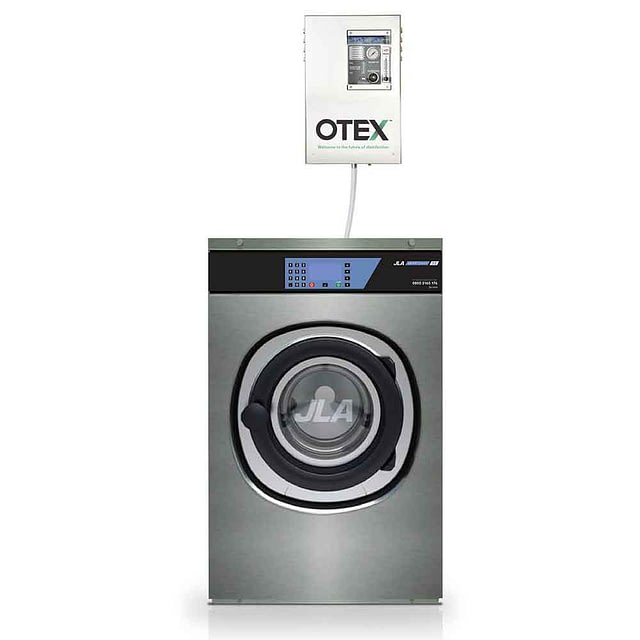
OTEX laundry is a validated ozone disinfection system recognised by the Department of Health as being more effective than traditional methods of disinfection, such as thermal washing.
In 2020, OTEX was tested as part of an in-depth study with De Montfort University in Leicester. Results showed that OTEX completely removes traces of coronavirus from laundry, even in large loads, and proved that the virus was not transferred to other textiles in the wash.

  • Always choose the appropriate program for the load
  • Make sure detergent containers are sufficiently full and that there are no air-locks in the delivery pipework
  • Daily check filters on the OTEX units, ozone generator and oxygen concentrator – these should be kept clear at all times
  • Do not obstruct the OTEX units
  • Ensure green power lights on the OTEX unit are on at all times
  • Observe the OTEX validation unit and room monitor – these provide assurance that the system is working correctly, along with realtime monitoring of the disinfection process
  • Report any faults or damaged pipe work as soon as possible to JLA on: 0800 591 903 or 01422 824 688

Laundry process checklist

Laundry process checklist

For more expert insights, visit the JLA Knowledge Hub.

Similar articles you may like

Loading...
Care home
  • Catering

How To Choose A Dishwasher For Your Care Home

  • 5th Sep 2025
  • 3 min read
We understand better than most how to help your kitchen and catering areas work more efficiently.
Care home fire safety assessment
  • Fire safety

Fire safety essentials for care homes

  • 30th Aug 2025
Whether you’re running a small local care home or a nationwide group, the safety of your residents, staff and visitors will be paramount. Legal compliance is part of the picture, with regulation like the Regulatory Reform (Fire Safety) Order 2005 needing to inform your fire safety strategy.
Frazer Reeves, Fire extinguisher expert
  • Frazer Reeves
  • Fire extinguishers expert

Myth

All foam extinguishers should have been removed by 4th July 2025.

Fact

Only foam extinguishers containing C8 (PFOA) were banned on 4th July 2025.

What is being banned and why?

The use of C8 Perfluorooctanoic Acid (PFOA) in AFFF fire extinguishers was banned in the UK on 4th July 2025. Given the ban on these extinguishers has already passed, organisations should replace them with alternative solutions as soon as possible.

The reason for the ban is that C8 extinguishers contain ‘forever chemicals’, known for their persistence in the environment and links to significant health risks.

Does this mean all foam fire extinguishers are banned?

No. Only extinguishers with C8 (PFOA) are banned. Newer extinguishers which do not contain C8 and include alternative chemicals like C6 are therefore still permitted under current regulations.

What is the myth?

The fire safety team at JLA has observed confusion amongst customers about the type of extinguishers banned and would like clarity on those which are still permitted.

The ban does not include all foam fire extinguishers and only applies to those containing C8. We would recommend checking your extinguishers before replacing them.

What is the future of fire extinguishers containing C6?

Fire extinguishers containing C6 are still permitted in the UK, but experts predict they may be phased out over time. There has been no announcement and the period of phasing out is normally 10 years, which means you will have plenty of time to replace them if a ban is enacted.

What is being banned and why?

As of 4th July 2025, the use of C8 Perfluorooctanoic Acid (PFOA) in AFFF (Aqueous Film Forming Foam) fire extinguishers has been prohibited in the UK. Given the regulation came into effect on 4th July 2025, organisations are advised to replace any affected extinguishers with compliant alternatives as a soon as possible.

The ban was introduced due to the presence of what are known as ‘forever chemicals’ in C8-based extinguishers. These substances are highly persistent in the environment and have been linked to health risks.

Does this mean all foam fire extinguishers are banned?

No. The ban applies only to extinguishers containing C8 (PFOA). Modern foam extinguishers that do not contain C8 remain compliant and are permitted under current legislation.

What is the myth?

The fire safety team at JLA has noted some confusion among customers regarding which extinguishers are affected by the ban. Not all foam fire extinguishers are prohibited—only those containing C8. We strongly recommend checking the specifications of your extinguishers before proceeding with replacements.

What is the future of fire extinguishers containing C6?

While there is potential for C6-based extinguishers to be phased out in the future, no formal announcement has been made. Typically, such phase-outs are implemented over a 10-year period.

Please feel free to get in touch with our fire safety experts if you have any questions.

For more expert insights, visit the JLA Knowledge Hub.

Similar articles you may like

Loading...
Fire safety and data
  • Fire safety

Why data is now key to fire safety compliance

  • 20th Aug 2025
JLA’s Mark Bone explains why improving data collection and digital record-keeping can reduce risk.
  • General

Scope 3 emissions – what should FMs know?

  • 8th Jul 2025
As JLA’s sustainability strategy lead, I take accountability for driving down emissions across our entire value chain. This means I’ve seen first-hand how much influence FMs can have – not just in managing day-to-day operations, but in shaping the long-term environmental impact of their organisations.
Mark Bone headshot
  • Mark Bone
  • Fire safety expert

Fire safety is not just a legal requirement; it is a vital responsibility that protects lives, property and business continuity. Yet many organisations unknowingly make mistakes that leave them exposed to unnecessary risk. 

Below are some of the most common oversights and why they matter.

Fire safety - fire in building

Falling behind on compliance

It’s vital that you adhere to the Regulatory Reform (fire safety) Order 2005 and carry out a Fire Risk Assessment for your site, document risks, and follow through with any works or procedures the Fire Risk Assessment highlights. This should be done ideally every 12 months.

Failure to meet legal standards can result in fines, reputational damage and, most importantly, increased danger during an emergency.

Neglecting alarm system maintenance

Your fire alarm system is critical for safely evacuating customers, residents, employees or contractors in the event of a fire. If it is not properly maintained, it may fail when you need it most.

Common issues include outdated systems, faulty sensors and poor connectivity. We recommend routine inspections and timely upgrades are critical to keeping alarms reliable.

Lack of equipment servicing

Fire extinguishers, sprinklers and other safety equipment require regular servicing. A neglected extinguisher could fail during a fire, turning a manageable situation into a a more serious situation. Ensure all fire safety equipment is inspected and serviced according to manufacturer and regulatory guidelines.

Infrequent alarm tests

Testing alarms is not optional. Regular tests confirm that your system works and familiarise staff with the alarm sound.

A weekly test of the fire alarm should be carried out using a different call point each time as best practice. Setting a specific time and day to carry out the test, for example at 10am every Wednesday morning, would be an effective way to make sure everyone is comfortable with processes, and avoid any panic if a real emergency hits.

Skipping these tests can lead to confusion and delays during an actual emergency.

Lack of frequent fire drills

Fire drills are essential for preparedness. Without practice, employees may panic or make dangerous mistakes during an evacuation. Schedule drills at least twice a year and review performance to improve response times.

You should carry out a fire alarm drill at least every 12 months, however, depending on your fire risk assessment this may be required every three months. Allowances should also be made for shift work, as every employee should know the procedures and where the fire assembly points are.

Poor log book management

Fire safety log books provide proof of compliance and a record of maintenance. Missing or incomplete logs can lead to legal issues and make it harder to track safety performance.

Your Responsible Person for fire safety should keep a record of every weekly test, false alarm activation and fire alarm activation, as well as documenting when fire protection equipment was last serviced and maintained.

Blocked or unclear escape routes

Blocked corridors and escape routes can have disastrous consequences. Not only does clutter pose a fire risk in itself, but it also puts people in danger as they evacuate – and of course can prevent evacuation altogether in an emergency.

It’s also extremely important to check all final fire doors are functional and unlocked in case of emergency (while keeping internal fire doors closed in order for them to serve their compartmentation purpose).

Failing to review AOVs

Automatic Opening Vents (AOVs) help control smoke during a fire, making evacuation safer and allowing the fire brigade with a safer entry. If they are not tested and maintained, they may fail when needed. Include AOV checks in your fire safety maintenance schedule.

Faulty fire doors

Commercial fire doors play a critical role in containing fire and smoke. Wear and tear, damaged intumescent seals and compromised glazing can reduce their effectiveness.

Interference with closing mechanisms, often caused by people trying to keep doors open, is another common issue. Regular servicing and maintenance are essential to ensure fire doors perform as intended.

Poor kitchen training

Many workplace fires start in kitchens across a variety of sectors like care home, school, hotel or restaurant. Unattended pans and hobs, incorrect use of appliances and poor awareness of fire risks can lead to incidents. Providing proper training and clear guidelines for kitchen safety is vital to prevent fires before they start.

How JLA can help

At JLA, we understand that fire safety is about more than compliance. It is about protecting people and property with solutions you can trust. Our experts provide comprehensive services, including alarm system installation and maintenance, equipment servicing, compliance audits and tailored fire safety strategies.

With JLA, you can be confident that your premises meet all legal requirements and that your people are prepared for any emergency.

Contact us today for more information.

Similar blogs you may like

Loading...
fire safety
  • Fire safety

Compliance Update: AFFF Foam Fire Extinguishers

  • 6th Jan 2026
The fire safety team at JLA has noted some confusion among customers regarding which extinguishers are banned. Not all foam fire extinguishers are prohibited—only those containing C8. We strongly recommend checking the specifications of your extinguishers before proceeding with replacements.
Fire in building
  • Fire safety

How to avoid key mistakes with fire safety

  • 5th Jan 2026
  • 5 min read
Fire safety is not just a legal requirement; it is a vital responsibility that protects lives, property and business continuity. Yet many organisations unknowingly make mistakes that leave them exposed to unnecessary risk. Discover some of the most common oversights and why they matter.
  • Giovanna Eaton
  • Compliance expert

Many commercial kitchens across the UK rely on gas-powered equipment and appliances, which introduce safety responsibilities if they are not managed or maintained effectively.

Gas-related hazards can lead to severe accidents, property damage, and even fatalities if not properly managed. Understanding these risks and implementing preventative measures is essential for any business operating a commercial kitchen.

Commercial gas cooker

Ensuring compliance with regulations

In the UK, commercial kitchens must comply with the Gas Safety (Installation and Use) Regulations 1998 and the Health and Safety at Work Act 1974. These regulations require that all gas appliances, pipework and flues are installed and maintained safely. Annual inspections must be carried out by a Gas Safe registered engineer.

Businesses should obtain and retain a valid CP42 certificate after each inspection and keep detailed records of servicing and testing in order to ensure compliance

Failure to meet these requirements can lead to significant fines, legal action, closure of the premises. Beyond legal obligations, adhering to these standards is a vital part of risk management, ensuring the safety of staff and customers while protecting the reputation and continuity of the business.

Gas leaks

Gas leaks are among the most serious hazards in a commercial kitchen. They can occur due to faulty connections, damaged pipes, or worn seals. A gas leak not only increases the risk of fire and explosion but also poses a threat of carbon monoxide poisoning.

Preventing leaks requires regular inspection of gas pipes and connections. Ensuring that emergency shut-off valves are accessible and staff are trained to operate them quickly in an emergency.

Poor ventilation

Adequate ventilation is critical in any commercial kitchen. Without it, harmful gases such as carbon monoxide can accumulate, creating a dangerous environment for staff. Kitchens should be equipped with properly installed and maintained ventilation systems, including extractor fans and hoods that function effectively. Routine airflow checks are essential to ensure compliance with safety standards and to maintain a healthy working environment.

Poorly maintained equipment

Equipment that is not serviced regularly can develop faults, increasing the likelihood of leaks or inefficient combustion. Businesses should follow manufacturer guidelines for maintenance and arrange annual inspections by certified gas engineers.

Prompt replacement of worn or damaged parts is vital to prevent breakdowns and maintain safe operation.

We recommend service contracts on all of your kitchen equipment to help ensure they are well maintained and any errors or faults are rectified.

Canopies and hoods

Flues and canopies play a vital role in removing fumes and excess heat from the kitchen. If they become blocked or damaged, dangerous gases can build up.

Regular canopy cleaning and inspection ensure both safety and compliance with HVAC TR19 and fire safety standards. Specialists like JLA inspect, clean and service all parts of your canopy system. Following a visual inspection of the extractor, access panels and filters the engineer will complete a deep clean and service your unit to remove grease and other blockages.

Staff training

Human error remains one of the most common causes of accidents in commercial kitchens. Even with the best equipment and systems, staff who are not properly trained can make mistakes that lead to incidents.

Comprehensive gas safety training should be provided to all kitchen staff, along with regular emergency drills. Clear safety instructions should be displayed near your kitchen equipment to reinforce best practices.

Improper installation

Gas-powered kitchen equipment installed by unqualified personnel can lead to non-compliance, therefore it is essential to use certified gas engineers for all installations and repairs. Before using any contractors, we recommend checking the Gas Safe register number, name and the signature of the engineer.

Fire safety integration

Fire safety should be closely aligned to gas safety in a commercial kitchen environment. Gas appliances introduce an ignition risk, and when combined with flammable materials and high cooking temperatures, have potential to become a risk.

Installing fire suppression systems in extraction hoods, keeping appropriate extinguishers accessible, and training staff to respond quickly are essential measures. Clear evacuation routes and the ability to shut off the gas supply in an emergency further reduce the risk of a small incident escalating into a major fire.

Trust the experts

By addressing gas safety risks proactively, businesses can protect their staff, customers, and reputation. Regular maintenance, proper ventilation, compliance with regulations, and thorough staff training are crucial for a safe kitchen environment.

If you need any assistance with commercial gas safety checks, kitchen canopy cleaning or fire safety in your commercial kitchen, get in touch with the experts at JLA today.

Similar blogs you may like

Loading...
fire safety
  • Fire safety

Compliance Update: AFFF Foam Fire Extinguishers

  • 6th Jan 2026
The fire safety team at JLA has noted some confusion among customers regarding which extinguishers are banned. Not all foam fire extinguishers are prohibited—only those containing C8. We strongly recommend checking the specifications of your extinguishers before proceeding with replacements.
Commercial gas cooker
  • Catering

How to ensure gas safety in commercial kitchens
  • 2nd Jan 2026
Many commercial kitchens rely on gas-powered equipment and appliances, which introduce safety responsibilities if they are not managed or maintained effectively. Understanding these risks and implementing preventative measures is essential for any business operating a commercial kitchen.
George Barclay
  • George Barclay
  • Laundry Expert

If you’ve reached the point where you feel your business could benefit from an on-premises laundry, investing in a commercial washing machine will be your priority. However, selecting a professional washer isn’t as simple as choosing the cheapest option in the catalogue – there’s a lot to consider to ensure that your appliance is the right fit.

Join our experts for a need-to-know look at the key things to consider when buying a new commercial washing machine. We’ll cover tips and information that you may not have thought about, empowering you to make the best possible decision for your business.

Hospital washing machines

Capacity and volume

Commercial washing machines are capable of processing loads that are far larger than any domestic appliance would be equipped to handle. For example, while standard commercial models start at around 7kg, industrial units can process loads of up to 150kg.

Of course, the capacity of the machine you ultimately choose will depend on your organisation’s laundry requirements. Hoteliers, for example, may opt for a max-capacity appliance capable of processing the largest loads, while a smaller-capacity appliance may be adequate for hair salons and other businesses that use washers relatively infrequently.

Consider, too, the space available in your on-premises laundry. If the space allows for it, it’s often recommended to deploy multiple washers as opposed to a single unit, as this will enable you to handle different laundry types while having a backup should one appliance fail. You may like to consider a stacked system if floor space is at a premium.

Energy and water efficiency

Choosing a powerful, high-capacity commercial washer may seem like a smart idea if you want to future-proof your laundry, but not if it comes at the expense of inefficiency. You should choose a machine that meets the current needs of your business, with the potential to add further appliances in the future should the need arise.

The larger the washer, the more energy and water it will ultimately use. Of course, industrial-grade machines may be the most suitable and efficient option in some commercial settings, but from our experience, there can be a tendency to invest in a machine that’s much too powerful and energy-intensive for the application at hand.

On an aside, it could also be worth seeking out commercial washers with smart technologies. For instance, JLA’s SMART washing machine technology uses special sensors and other innovations to calculate exactly how much water, power, and detergent a cycle will need to clean your laundry load. This process optimises water, energy, and detergent consumption, and helps to save you time and money from wash to wash.

Durability

One of the core benefits of investing in a commercial washer vs a top-of-the-range domestic equivalent is the jump in long-term durability and performance that these appliances provide.

Professional washers intended for business use are manufactured from durable high-end materials like stainless steel as opposed to plastic and aluminium, which means they’re capable of outlasting their top-spec household counterparts, even with continuous daily operation accounted for.

Plus, this high-end build quality also means that commercial washers are much less prone to faults, making them a reliable partner for your business day to day.

Specialist considerations

Aside from volume, capacity, and efficiency, commercial washers are categorised by special features and capabilities designed to boost hygiene and make daily operation simpler. For example, at JLA, we supply commercial washers with specialist features, including:

  • Barrier washing machines: Capable of preventing harmful cross-contamination, barrier washers are recommended for hospitals and care homes where optimal hygiene is a priority.
  • OTEX and thermal disinfection: In environments where infection control is essential, OTEX ozone disinfection and its thermal counterpart can offer peace of mind that germs and bacteria are not transmitted through laundry loads.
  • Coin-operated washers: If you’re thinking of starting your own commercial launderette, coin-op washers are an effective solution for maximising revenue while ensuring peak usability.

Speed and cycle options

Commercial washing machine - care

While the capacity of a commercial washer ought to be your number one priority, the speed of an appliance’s wash cycles is equally important. The faster the wash times, the more efficient the throughput, which can make all the difference to the overall efficiency of your laundry operations.

Note, too, that seeking out a machine with different cycle options may also be of major benefit to your business. For example, some machines offer enhanced sanitisation cycles, while others have settings to deal with delicates and heavy soiling. Make sure the washer you choose meets the exact requirements of your business.

Maintenance and servicing

We cannot stress enough how important it is to ensure that your commercial washer is easy to maintain and service, both now and in the future. Having access to local engineering support and aftercare assistance is crucial in minimising potential downtime while retaining the best possible performance and efficiency from your appliance.

At JLA, we offer an extensive suite of aftercare services to help you maintain and service your commercial laundry equipment in line with manufacturer recommendations. Our commercial laundry contracts are a popular choice for scheduled servicing and maintenance, while Total Care from JLA offers a simple way to access on-demand help and support when you need it – all for one fixed monthly fee.

Equipment cost

Forget capacity, volume, and equipment efficiency; we can guarantee that the number one consideration for most business leaders when investing in commercial laundry equipment will be the cost.

Of course, there’s a lot to consider when budgeting for the overheads associated with new laundry equipment. You should factor in purchase price, installation, and ongoing operating costs into your decision-making, so you can find the most suitable and cost-effective solution for your business.

Don’t forget, too, that commercial laundry equipment rental is also an option if you’re not keen on the idea of investing major upfront capital in a new on-premises laundry suite. JLA offers a variety of flexible equipment rental agreements, so you can get the equipment you need with no upfront liability.

For more information, check out our guide exploring the real cost of commercial laundry equipment.

Compliance and safety

Running a commercial washer isn’t as simple as pressing the on button. Depending on your business and your laundry requirements, there may be a raft of compliance measures that you will have to adhere to, along with HS and fire safety requirements.

Before investing in a commercial washer for your premises, make sure you’re up to speed on the compliance and safety requirements associated with your business type. Some industries may have their own set of fire safety and sanitation standards, for example, particularly in healthcare and hospitality.

It’s worth noting, too, that all washers should be cleaned and maintained at regular intervals to guarantee maximum operational safety and performance.

Reputation and support

Before you buy a commercial laundry appliance, make sure you perform a few due diligence checks on the company you’re buying from. Do they have good reviews for customer support? And are they able to offer reliable aftercare should an issue arise with your new appliance?

Better still, why not partner directly with an established firm like JLA? With 50+ years in the commercial laundry sector, we have the credentials and expertise to steer you in the direction of your next laundry room purchase.

Ready to get started with JLA? Contact our expert team today on 0808 258 8100.

JLA's washing machine buyers guide

Similar blogs you may like

Loading...
Care home resident
  • Hygiene

Why does laundry hygiene matter?

  • 6th Jan 2026
Good laundry hygiene is a vital pillar of any care home’s infection control strategy. The careful handling, processing, disinfection and storage of linens will all help to prevent the spread of potentially dangerous illnesses, protecting residents, staff and visitors.
Hospital washing machines
  • Laundry

What should I consider before investing in a commercial washing machine?

  • 1st Jan 2026
Selecting a commercial washer isn’t as simple as choosing the cheapest option in the catalogue – there’s a lot to consider to ensure that your appliance is the right fit. Join our experts for a need-to-know look at the key things to consider when buying a new commercial washing machine. We’ll cover tips and information that you may not have thought about, empowering you to make the best possible decision for your business.

Recent Posts

  • Why does laundry hygiene matter?
  • Compliance Update: AFFF Foam Fire Extinguishers
  • How to avoid key mistakes with fire safety
  • How to ensure gas safety in commercial kitchens
  • What should I consider before investing in a commercial washing machine?

Recent Comments

    Archives

    • January 2026
    • December 2025
    • November 2025
    • October 2025
    • September 2025
    • August 2025
    • July 2025
    • June 2025
    • May 2025
    • April 2025
    • March 2025
    • February 2025
    • January 2025
    • December 2024
    • November 2024
    • October 2024
    • September 2024
    • August 2024
    • July 2024
    • June 2024
    • May 2024
    • April 2024
    • March 2024
    • February 2024
    • January 2024
    • December 2023
    • November 2023
    • October 2023
    • September 2023
    • August 2023
    • July 2023
    • June 2023
    • May 2023
    • April 2023
    • March 2023
    • February 2023
    • January 2023
    • November 2022
    • October 2022
    • September 2022
    • July 2022
    • June 2022
    • May 2022
    • April 2022
    • March 2022
    • December 2021
    • April 2021
    • February 2021
    • January 2021
    • December 2020
    • November 2020
    • October 2020
    • September 2020
    • August 2020
    • July 2020
    • June 2020
    • May 2020
    • February 2020
    • November 2019
    • October 2019
    • September 2019
    • July 2019
    • May 2019
    • April 2019
    • March 2019
    • January 2019
    • September 2018
    • May 2018
    • October 2017
    • August 2017
    • May 2017
    • April 2017
    • March 2017
    • August 2016
    • May 2016
    • March 2016
    • February 2016
    • August 2015
    • July 2015
    • June 2015
    • May 2015
    • March 2015
    • January 2015
    • November 2014
    • May 2014

    Categories

    • Catering
    • Energy saving
    • Fire safety
    • General
    • HVAC
    • Hygiene
    • Laundry
    • Testimonials

    Meta

    • Log in
    • Entries feed
    • Comments feed
    • WordPress.org
    Need help? Call us on

    01422822282

    Facebook Linkedin
    About JLA
    • Who we are
    • Careers
    • ESG at JLA
    • Accreditations
    • Blog
    • Total Care from JLA
    • Testimonials
    • Who we are
    • Careers
    • ESG at JLA
    • Accreditations
    • Blog
    • Total Care from JLA
    • Testimonials
    Solutions
    • Commercial laundry equipment
    • Catering equipment
    • HVAC
    • Fire safety
    • Infection Control
    • Commercial laundry equipment
    • Catering equipment
    • HVAC
    • Fire safety
    • Infection Control
    Sectors
    • Care Homes
    • NHS & Healthcare
    • Health clubs
    • Holiday parks
    • Hospitality
    • Hotels & spas
    • Housing
    • Facilities management
    • Football clubs
    • Pubs & restaurants
    • Equine and Stables
    • Vets & animal care
    • More sectors
    • Care Homes
    • NHS & Healthcare
    • Health clubs
    • Holiday parks
    • Hospitality
    • Hotels & spas
    • Housing
    • Facilities management
    • Football clubs
    • Pubs & restaurants
    • Equine and Stables
    • Vets & animal care
    • More sectors
    • Privacy & cookies
    • Terms & conditions
    • Modern slavery
    • Covid-19
    • Responsibility
    • Site map
    • Privacy & cookies
    • Terms & conditions
    • Modern slavery
    • Covid-19
    • Responsibility
    • Site map
    Helen Buchan

    Helen Buchan

    Infection control expert

    JLAs infection control expert, Helen is always seeking ways to bring new solutions to infection control challenges, and is also passionate about sourcing the best range of products to help customers stay compliant, reduce energy consumption and costs.

    Learning, research and development are central to Helen’s role – having led extensive testing of our products, she has an unrivalled understanding of what works best for our customers, as well as the ever-shifting regulations that impact them.

    Read Helen's full profile
    Frazer Reeves, Fire extinguisher expert

    Frazer Reeves

    Fire extinguishers expert

    Frazer is as an Area Extinguisher Manager and is responsible for overseeing operational teams, commercial project execution, compliance frameworks, and the coordination of specialist engineers.

    A BAFE-accredited fire safety professional with over eight years of industry experience, Frazer brings in-depth knowledge and a strong track record in conducting surveys and managing contracts.

    He is highly knowledgeable at driving regulatory compliance, ensuring safety assurance, and delivering operational excellence across a broad range of fire safety projects.

    Read Frazer's full profile
    Mark Bone headshot

    Mark Bone

    Fire safety expert

    With an extensive technical background, Mark advises customers with his wealth of fire safety and security knowledge. His experience spans technical, commercial, customer service and operational roles delivering a well-rounded service for JLA clients.

    Read Mark's full profile

    Giovanna Eaton

    Compliance expert

    Giovanna has worked at JLA for six years and has a wide range of experience working with our laundry and catering customers to help them keep compliant.

    Her day-to-day role includes advising customers what action is required to maintain compliance with current legislation and regulations.

    Whether it is commercial canopy maintenance in accordance with TR19 standards or gas-safety checks to keep your boiler rooms, kitchens and equipment safe, Giovanna has a wealth of expertise, advice and tips for businesses across the UK.

    Read Giovanna's full profile
    George Barclay

    George Barclay

    Laundry Expert

    Head of Installations George joined JLA as an apprentice service engineer in 2011. With years of experience in plumbing, engineering, electrical and mechanical engineering, he oversees the delivery of safe, compliant installations.

    George is Gas qualified for both laundry and COMCAT 1, 2, 3, 5, and holds IOSH Managing Safety and 17th edition accreditation.

    Read George's full profile

    Get my quote

    By clicking Get my quote, you agree to the Terms and Conditions set out by this site, including our Privacy Policy