• About us
    • Back
    • Careers
    • ESG
    • Accreditations
    • Testimonials
    • Blog
    • Back
  • Solutions
    • Back
    • JLA Total Care
    • JLA Response
    • Compliance services
    • Flexible payment systems
    • Repairs
    • Back
  • Sectors
    Back
      • Care Homes
      • Contract Cleaners
      • Education
      • Equine and Stables
      • Facilities Management
      • Football Clubs
      • NHS and Healthcare
      • Health Clubs
      • Holiday Parks
      • Hotels & Spas
      • Housing
      • Launderettes
      • Prisons
      • Pubs & Restaurants
      • Public Sector
      • Vets & Animal Care
    Back
  • icon_20x20new_call0808 239 7578
  • comment-questionHelp
  • icon_20x20new_searchSearch
  • icon_20x20new_myjlamyJLA
    • Back
    • Manage your account online with MyJLA

      myJLA supports the smooth running of your business, with statements, job sheets, site information and essential documents all in one place.

      Sign in
      Register your interest
    • Back
JLA
  • Laundry
    Back
      • Commercial washing machines
      • Coin-operated washing machines
      • Barrier washers
      • Stacked systems
      • View all commercial washing machines
      • Commercial tumble dryers
      • Coin operated tumble dryers
      • Stackable
      • Safe technology
      • View all commercial tumble dryers
      • Commercial irons
      • Dryer ironers
      • Rotary irons
      • Hand finishing equipment
      • View all commercial Irons
      • Infection control
      • Medical macerators
      • Bedpan washers
      • Air filtration systems
      • View all infection control
      • OTEX
      • Laundry
      • Mould compliance
      • View all OTEX
      • Laundry solutions
      • Contactless laundry equipment
      • Commercial laundry service contracts
      • Managed laundry solutions
      • Launderette equipment
    Back
  • Catering
    Back
      • Cooking appliances
      • Commercial ovens
      • Commercial fryers
      • Commercial grills
      • Commercial griddles
      • Commercial hobs
      • Commercial induction
      • Bratt pans
      • Fridges & freezers
      • Commercial fridges
      • Commercial freezers
      • Commercial ice machines
      • Blast chillers
      • Food warmers
      • Bain Maries
      • Hot Cupboards
      • View all food warmers
      • Dish & glasswashers
      • Commercial Dishwashers
      • Glasswashers
      • Utensil washers
      • Catering solutions
      • Commercial kitchen installation
      • Kitchen furniture
    Back
  • HVAC
    Back
      • Heating
      • Boilers
      • Wall mounted
      • Floor standing
      • Hybrid heating systems
      • Commercial boiler service contracts
      • Total care for heating
      • View all heating
      • Hot water
      • Hot water cylinders
      • Water storage heaters
      • Sterile equipment services
      • Air conditioning
      • Commercial air conditioning
      • Commercial air conditioning service contracts
      • Air handling units
      • Cellar cooling systems
      • Total Care for air conditioning
    Back
  • Fire & security
    Back
      • Fire
      • Emergency lighting
      • Fire extinguishers
      • Fire alarms
      • AOV systems
      • View all fire safety
      • Passive fire safety
      • Commercial fire doors
      • View all passive fire safety
      • Fire risk assessments
      • Fire safety training
      • Security systems
      • Building services
      • Electrical services
    Back
  • Detergents
    Back
      • Laundry detergents
      • Commercial laundry detergents
      • Auto dosing pumps
      • Catering detergents
      • Commercial kitchen chemicals
    Back
  • Call us free:
    01422822282
Get a quote
JLA
Call us free:
01422822282
  • Commercial laundry equipment
    • Commercial washing machines
      • Coin-operated washing machines
      • Barrier washers
      • Stacked systems
      • Commercial washing machines
    • Commercial tumble dryers
      • Coin-op dryers
      • Stackable
      • Safe technology
      • All commercial dryers
    • Commercial irons
      • Dryer ironers
      • Roller ironers
      • Hand Finishing Equipment
    • Infection Control
      • Medical macerators
      • Bedpan washers
      • Air filtration systems
      • View all infection control
    • OTEX
      • Laundry
      • Mould compliance
      • View all OTEX
    • Contactless Laundry Equipment
    • Managed laundry solutions
    • Launderette equipment
    • Commercial laundry service contracts
  • Commercial catering equipment
    • Cooking appliances
      • Commercial combi ovens
      • Combi
      • Commercial range ovens
      • Commercial convection ovens
      • Commercial fryers
      • Commercial grills
      • Commercial griddles
      • Commercial hobs
      • Commercial induction hobs
      • Bratt pans
    • Refrigeration
      • Commercial fridges
      • Commercial freezers
      • Commercial ice machines
      • Blast chillers
    • Dishwashers & glasswashers
      • Commercial dishwashers
      • Undercounter dishwashers
      • Passthrough dishwashers
      • Commercial glasswashers
      • Utensil washers
    • Food warmers
      • Bain Maries
      • Hot Cupboards
      • View all food warmers
    • Water boilers
      • JLA water boiler
    • Modular
    • Furniture
    • Commercial kitchen design
  • HVAC
    • Commercial heating
      • Commercial boilers
      • Hot water cylinders
      • Water storage heaters
      • Hybrid heating systems
      • Commercial boiler service contracts
      • Total care for heating
    • Commercial air conditioning
    • Commercial air conditioning service contracts
    • Air handling units
    • Cellar cooling systems
    • Total Care for Air Conditioning
    • Sterile Services
  • Fire & security
    • Fire
      • Emergency lighting
      • Fire extinguishers
      • Fire alarms
      • AOV systems
    • Passive fire safety
      • Commercial fire doors
    • Fire risk assessments
      • Fire safety training
    • Commercial security systems
    • Building services
    • Electrical services
  • Detergents
    • Laundry detergents
    • Auto dosing-pumps
    • Catering detergents
  • Solutions
    • Total Care
    • JLA Response
    • Compliance services
    • Flexible payment systems
    • Repairs
  • About us
    • Careers
    • ESG
    • Accreditations
    • Testimonials
  • Sectors
    • Care Homes
    • Hotels & spas
    • Pubs & restaurants
    • Education
    • Holiday parks
    • Health clubs
    • Housing
    • Facilities management
    • Football clubs
    • Launderettes
    • NHS & Healthcare
    • Prisons
    • Public sector
    • Vets & animal care
    • Equine and Stables
  • Help
  • MyJLA
  • Contact
  • Commercial laundry equipment
    • Commercial washing machines
      • Coin-operated washing machines
      • Barrier washers
      • Stacked systems
      • Commercial washing machines
    • Commercial tumble dryers
      • Coin-op dryers
      • Stackable
      • Safe technology
      • All commercial dryers
    • Commercial irons
      • Dryer ironers
      • Roller ironers
      • Hand Finishing Equipment
    • Infection Control
      • Medical macerators
      • Bedpan washers
      • Air filtration systems
      • View all infection control
    • OTEX
      • Laundry
      • Mould compliance
      • View all OTEX
    • Contactless Laundry Equipment
    • Managed laundry solutions
    • Launderette equipment
    • Commercial laundry service contracts
  • Commercial catering equipment
    • Cooking appliances
      • Commercial combi ovens
      • Combi
      • Commercial range ovens
      • Commercial convection ovens
      • Commercial fryers
      • Commercial grills
      • Commercial griddles
      • Commercial hobs
      • Commercial induction hobs
      • Bratt pans
    • Refrigeration
      • Commercial fridges
      • Commercial freezers
      • Commercial ice machines
      • Blast chillers
    • Dishwashers & glasswashers
      • Commercial dishwashers
      • Undercounter dishwashers
      • Passthrough dishwashers
      • Commercial glasswashers
      • Utensil washers
    • Food warmers
      • Bain Maries
      • Hot Cupboards
      • View all food warmers
    • Water boilers
      • JLA water boiler
    • Modular
    • Furniture
    • Commercial kitchen design
  • HVAC
    • Commercial heating
      • Commercial boilers
      • Hot water cylinders
      • Water storage heaters
      • Hybrid heating systems
      • Commercial boiler service contracts
      • Total care for heating
    • Commercial air conditioning
    • Commercial air conditioning service contracts
    • Air handling units
    • Cellar cooling systems
    • Total Care for Air Conditioning
    • Sterile Services
  • Fire & security
    • Fire
      • Emergency lighting
      • Fire extinguishers
      • Fire alarms
      • AOV systems
    • Passive fire safety
      • Commercial fire doors
    • Fire risk assessments
      • Fire safety training
    • Commercial security systems
    • Building services
    • Electrical services
  • Detergents
    • Laundry detergents
    • Auto dosing-pumps
    • Catering detergents
  • Solutions
    • Total Care
    • JLA Response
    • Compliance services
    • Flexible payment systems
    • Repairs
  • About us
    • Careers
    • ESG
    • Accreditations
    • Testimonials
  • Sectors
    • Care Homes
    • Hotels & spas
    • Pubs & restaurants
    • Education
    • Holiday parks
    • Health clubs
    • Housing
    • Facilities management
    • Football clubs
    • Launderettes
    • NHS & Healthcare
    • Prisons
    • Public sector
    • Vets & animal care
    • Equine and Stables
  • Help
  • MyJLA
  • Contact
Get a quote

Month: June 2026

Mark Bone headshot
  • Mark Bone
  • Fire safety expert

In early 2026, UK fire door regulations underwent some of the biggest regulatory changes in years. This came about through the phasing out of old British testing standards and stricter enforcement under the Building Safety Act and Fire Safety Act.

Since it’s been several years since we discussed fire doors here on the JLA blog, we thought it was high time we revisited the topic to make sure our readers are primed on the important updates and amendments that have come into effect. You’ll find key takeaways down below, along with further information and analysis from our fire safety professionals.

Fire safety; be prepared

Key takeaways

  • Building Safety Regulator becomes independent from HSE on January 27, 2026
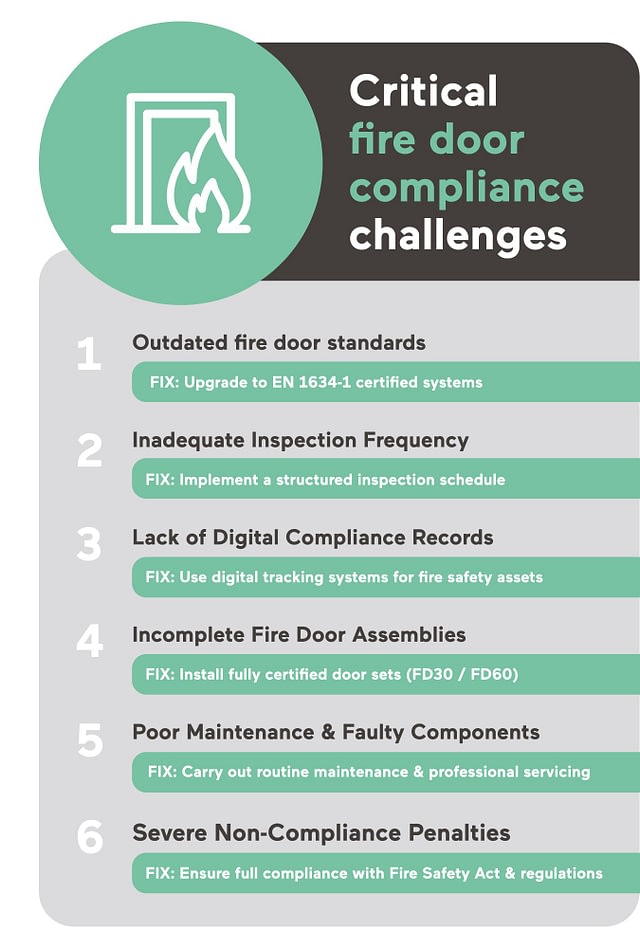
  • BS 476-22 fire door testing standard withdrawn – replaced by EN 1634-1
  • Quarterly fire door inspections mandatory for buildings over 11 metres in height
  • Digital “Golden Thread” documentation required for all fire safety equipment
  • Non-compliance penalties include unlimited fines and up to 2 years’ imprisonment
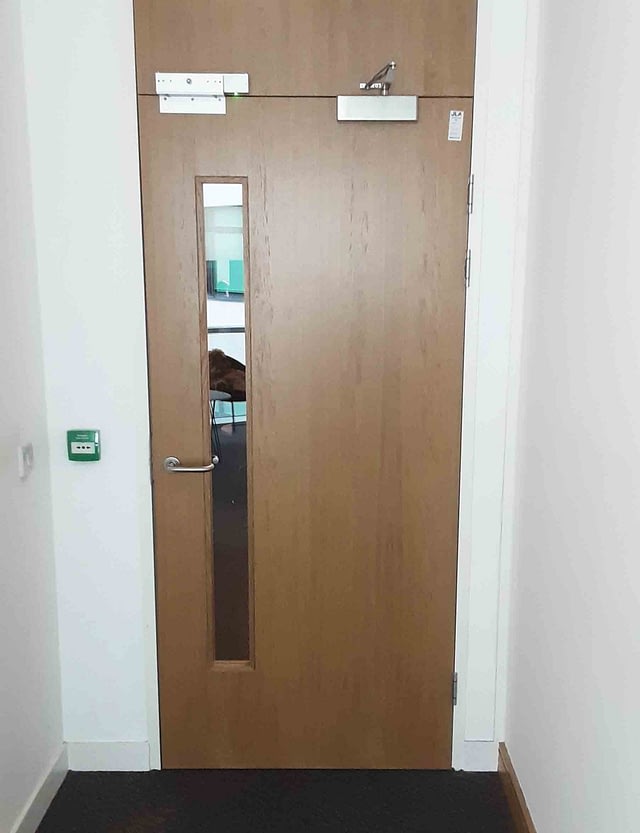
  • FD30 and FD60-rated doors must include certified frames, seals, and hardware as complete assemblies

Table of Contents

What are UK fire door regulations in 2026?

Before we introduce the latest changes to fire door regulations for 2026, we wanted to clarify the main legal framework for fire door safety in the UK. Several guidelines inform the rules and regs around commercial fire doors, including the following.
UK fire door regulations in 2026 are based on wording from the Regulatory Reform (Fire Safety) Order 2005, the Fire Safety Act 2021, and the Fire Safety (England) Regulations 2022. Other rules have also been introduced in light of the Grenfell Tower fire response reforms. 

Regulatory changes: What’s new?

While significant fire door rule changes were introduced in 2023, 2026 saw a major technical update to British Standard BS 8214. What’s more, the BSR (Building Safety Regulator) also separated from HSE at the start of the year, a move that brought changes to enforcement powers and inspection frequency.
Learn more about 2026’s regulatory updates right here…

Independent Building Safety Regulator

As alluded to earlier, the BSR broke free from the HSE in January 2026, paving the way for enhanced enforcement powers, more frequent building inspections, and more centralised coordination with local fire and rescue services.

Technical standards update

BS 476-22 was withdrawn in March 2026, replaced by the new EN 1634-1 for commercial fire doors. The update brought several revisions to how fire doors are installed and maintained, along with a significant new focus on the entire tested door system, not just the door leaf.

Digital documentation requirements

As part of the UK’s post-Grenfell fire safety reforms, a new “Golden Thread” system was introduced, requiring accurate and continuous digital record-keeping of a building’s safety-critical information. JLA customers can rely on full integration with our digital monitoring platforms to ensure full compliance with the new Golden Thread regulatory guidelines.

Fire door inspection regulations UK

Now that we’ve outlined the core changes to fire door safety regulations in the UK, let’s take a closer look at the rules and regulations that all commercial building managers must be aware of.

Mandatory inspection frequencies

There are now variable fire door inspection frequencies for different commercial premises in the UK, including: 

  • Buildings over 11m: Quarterly inspections for communal areas
  • Buildings over 11m: Annual inspections for flat entrance doors
  • Commercial buildings: Six-monthly professional inspections per BS 9999
  • High-traffic areas: Monthly visual checks recommended

Inspection checklist and requirements

If you have a fire door inspection on the horizon, it can be useful to know exactly what safety regulators will be assessing on your premises. This is an up-to-date checklist, detailing the priority points for fire safety inspectors as of 2026:

  • Gap tolerance measurements using certified gauges
  • Intumescent strip and smoke seal condition assessment
  • Self-closing device functionality testing
  • Third-party certification label verification
  • Hardware compatibility and fire rating checks

Commercial fire door regulations UK

Commercial business premises have their own unique fire door safety requirements, so it’s important to stay up to speed on current legislation to ensure your business remains compliant.
With that in mind, let’s take a closer look at the latest rules and guidelines for fire door safety on commercial premises in the UK.

Responsible person duties

Responsible person duties for commercial fire door safety stem from the RRO 2005 and the Building Safety Act 2022. Specifically, these guidelines outline the duties that competent parties must perform to ensure doors are fire safe, along with the liability and enforcement consequences that can stem from failure to comply with these regulations on the part of your business’s responsible person.

Workplace-specific requirements

Commercial fire door safety legislation splinters into separate, standalone guidance depending on the type of business and its workplace. For instance, office buildings have significantly different fire door safety requirements than, say, hotels or manufacturing sites, so it’s critical that you fully understand the exact requirements for your workplace and premises types – all of which can be found in the RRO 2005 and the Building Safety Act 2022.

Kitchen fire door regulations UK

Commercial kitchens have unique fire door safety requirements, particularly given the presence of steam, smoke, and grease. It’s therefore super critical that any self-closing mechanisms are regularly checked and maintained, particularly in high-traffic areas.
Of course, commercial kitchen fire door safety is closed link to other active and passive fire control measures, including ventilation and fire suppression systems. JLA’s fire safety experts can advise on a fully tailored solution for your commercial kitchen, including HVAC upgrades and fire door inspections, maintenance, and installation.

Fire door ratings and technical requirements

The deployment of different types of commercial fire doors throughout your business premises is critical to ensure complete compliance and safety. Typically, there are two types of fire door ratings that you need to know, each suited to different applications around your premises.These include.

Rating

Fire resistance

Typical thickness

Common applications

Smoke seal version

FD30

30 minutes

Generally 44mm

Standard internal office doors, residential flat entrances, and lower-risk compartment lines.

FD30s

FD60

60 minutes

Usually 54mm

Protected stairwells, plant rooms, high-risk areas, and buildings over 11m where required.

FD60s

Complete door set requirements

Over the past year or so, there’s been a significant shift towards complete door set compliance for commercial fire doors, as opposed to outdated rules which focused almost exclusively on the integrity of door leaves.
Historically, the door leaf was considered the most important aspect of fire door safety; provided this element met industry standards, it could be combined with existing components. Today, however, things have changed; inspectors test the complete door set, so all parts must be compliant and in line with industry standards.
At JLA, we provide fully tested door sets, including the leaf, frame, seals, hinges, locks, closers, and fixings. Our fire safety experts also work to new installation guidelines for complete door sets, taking into account thresholds, gap tolerance, and product set traceability.

Compliance and penalties

Before we draw our guide to UK fire door regulations to a close, we thought it was worth reiterating the potential penalties for non-compliance that UK businesses face. There are some significant legal consequences to be aware of here, which add weight to the importance of full fire door safety compliance. 
Potential legal penalties for non-compliance with fire door legislation include:

  • Unlimited fines for businesses or persons in breach of fire door safety standards
  • Prison sentences of up to 24 months, depending on the severity of the breach
  • Serious implications for your insurance, along with exposure to liability
  • Enforced premises closure, withdrawal of licences, and related prohibition orders

Professional fire door services and maintenance from JLA

JLA provides fully accredited fire safety solutions, products, and services for UK businesses, including full fire door sets for businesses in every industry sector. Our fire safety specialists provide BAFE and third-party-accredited installation services, along with emergency support and full integration with our suite of digital asset management tools.

Need help with your fire safety compliance? We can help. Whether you manage a commercial kitchen or a large manufacturing site, our fire safety advisers can offer guidance and expertise on all areas of your fire safety infrastructure. Get in touch today on 0808 239 7578 to learn more.

 FAQs

How often must fire doors be inspected in commercial buildings?

Generally, it’s advised that fire doors be inspected every quarter in commercial buildings. However, this will depend on the type of premises; for instance, in communal areas where residents live (say, a care home or health facility), fire doors must be checked every three months.

What happens to fire doors tested under BS 476-22 after 2026?

Fire doors tested under the outgoing BS 476-22 standard did not automatically become non-compliant following January’s rule changes. Instead, businesses have until September 2029 to ensure that all doors tested under BS 476-22 are upgraded to the new EN 1634-1 standard.

Who can legally install or repair fire doors under the 2026 regulations?

While there’s no standardised law governing who can legally install or repair commercial fire doors in the UK, this work must be carried out by a competent party. Typically, you should look for engineers with accreditations like BAFE, FIA, IFC, CHAS, BM TRADA, and Smoke Control Association – all of which you’ll find at JLA.

Picture of Mark Bone
Mark Bone

Operations Director Mark joined JLA in 2019 and now manages the delivery of turnkey fire safety and security systems designed to protect people, premises and critical assets.

Drawing on his extensive technical, commercial and customer service experience, Mark helps clients with everything from system selection and project planning to ongoing maintenance, ensuring they can navigate complex operating challenges.

In a shifting regulatory landscape, Mark also provides a wealth of safety-first guidance, with a particular focus on reducing risk and strengthening compliance across every site.

Mark Bone headshot
  • Mark Bone
  • Fire safety expert

Did you know that early detection of fire can reduce potential damage by 90%? That’s the difference between losing thousands in assets versus hundreds, and it’s this peace of mind that a £200 smoke detector can bring to your business.

The average commercial building fire in the UK costs £1.4 million in damage, while a quality smoke detector costs just a couple of hundred pounds. Add to that the potential insurance savings that a BAFE fire risk assessment can also bring to the table, and it’s clear that a comprehensive approach to commercial fire safety is non-negotiable. 

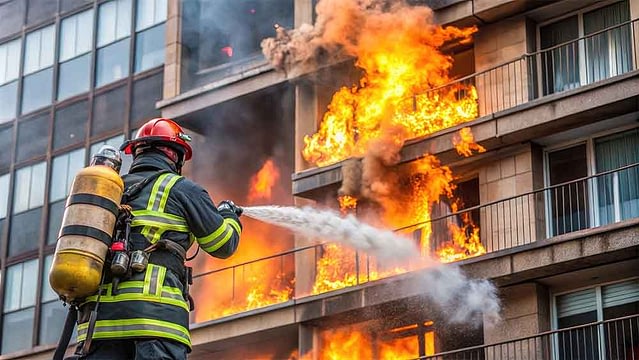
Fire safety - fire in building

Key takeaways

  • Average commercial fire causes £1.4 million in damage, while detection systems cost under £200 per device
  • Early detection reduces fire damage by up to 90% compared to undetected fires
  • Modern fire detectors integrate with building management systems for instant emergency response
  • BAFE fire risk assessment compliance can reduce insurance premiums by 10-30%
  • ROI on fire detection investment typically achieved within first prevented incident
  • Professional fire alarm maintenance contract ensures 99.9% system reliability


Table of Contents

Understanding fire detection technology

Commercial fire detection systems rely on two core devices: smoke/heat detectors, fitted throughout your premises to detect the initial physical symptoms of fire, and fire alarm control panels (or FACPs), which receive signals from your heat and smoke detectors, triggering wider alarms and sending alerts directly to emergency services or monitoring partners, for the fastest possible response time.

That’s the basic setup for early fire detection in most commercial premises. Of course, this system can be scaled up depending on the size of your operations, with dozens of detectors fitted in high-risk locations around your premises, ready to alert centralised FACP units.

Modern fire detection technology also means that you can choose from a variety of wired and wireless smoke and heat detectors, depending on the exact needs of your business. Naturally, different solutions and setups may push your system above the quoted £200 mark, but given the damage that fires can cause, any system is always worth the investment.

Modern detection features: How technology can help protect your assets

Modern fire detection and alarm systems feature more than just detectors, sounders, alarms, and FACPs. These systems incorporate innovative technologies to boost overall effectiveness – here are a few examples of the kinds of features that you may encounter on modern fire safety solutions.

  • Remote monitoring and smart alerts: Modern FACPs incorporate several SMART capabilities, including remote monitoring. Should your detectors trigger an alert, you can receive these directly on your smartphone, for maximum oversight even if you’re away from site.
  • AI-powered false alarm reduction technology: Regular false alarms can not only cause disruption, but they can also instill a dangerous sense of complacency. Fire safety experts are leveraging AI to help reduce false alarm frequency, so you always know when an alert is the real deal.
  • Fully bespoke fire detection systems: There’s rarely a one-size-fits-all solution to fire safety, which is why modern systems are usually 100% bespoke to your premises. A combination of detectors, sounders, and FACPs may be deployed across your building, ensuring maximum adaptation to different risks and environmental factors.

The true cost of commercial fires

It’s estimated that commercial fires cause over £2.2 billion worth of damage every year to UK businesses. That accounts for both direct and indirect fire-related costs; direct costs include physical damage to on-site assets and resources, while indirect costs are a catch-all for business interruption, potential liability claims, and insurance-related expenses.

Of course, the cost of a commercial fire can be significantly reduced through early detection and comprehensive monitoring. When a fire is detected instantly, this could save your business thousands in direct and indirect costs; you may even receive a reduced insurance premium if you can demonstrate the efficacy of your fire detection infrastructure.

Let’s take a closer look at the direct and indirect consequences of fire in a commercial building, so you can see where costs, losses, and unexpected overheads can quickly mount up.

Cost type

Examples

Why early detection matters

Direct property damage

Building fabric, contents, stock, equipment

Detection helps contain fire before spread

Business interruption

Closures, lost bookings, halted production

Faster response reduces downtime

Liability

Injury claims, legal action, customer impact

Alarms and evacuation protect people

Compliance and enforcement

Notices, fines, prosecution

Maintained systems support legal defence

Insurance impact

Higher premiums, claim disputes, exclusions

Documentation improves insurer confidence

Reputation

Lost trust, media scrutiny, customer churn

Prevention protects long-term value

Industry-specific fire risks

While every business is vulnerable to fire, it’s worth looking at some examples of how fire can impact organisations differently. That way, you can get a sense of the unique challenges and prospective costs that businesses are exposed to, and the critical importance of early fire detection and prevention.

  • Hotels and hospitality venues: It’s estimated that a building fire in a hotel or hospitality venue costs an average of £850,000 worth of direct and indirect damage per incident. That may be as a result of direct damage to the building itself, but will most likely stem from business interruption, loss of bookings, customer impact, and legal action.
  • Care homes: Care homes are particularly vulnerable to fire-related costs, since fire safety is wrapped up in their overall compliance and H&S guidelines. Regulatory fines coupled with the direct cost of on-site fire damage can cripple a facility’s finances, not to mention reputational damage and ongoing liability claims.
  • Manufacturing facilities: Not only are manufacturing plants and factories at a higher risk of fire due to the equipment and machinery they contain, but costs can spiral when you factor in business interruption and the replacement of critical equipment. Indeed, severe fires can impact the supply chain more generally, so there may be wider repercussions for the sector.
  • Universities and research institutions: The outbreak of fire in a university or similar institute can be devastating for all stakeholders, resulting in irreplaceable research and equipment losses. This shows the true cost of commercial fire, beyond pounds and pence.

ROI calculation: £200 investment vs £200 million protection

We started our guide to the cost of commercial fire by suggesting that a £200 investment in fire detection technology could potentially lead to up to £200 million in protection for you and your business. So, how do the numbers stack up? 
Let’s take a look at the cost-benefit analysis of commercial fire safety equipment, so you can get a gauge on how much an advanced fire detection and alarm system is likely to cost.

Scenario

Approximate cost

Potential value protected

One commercial detector

£100–£200 per point

A room, zone or critical risk area

500 detectors across a large estate

Around £100,000 at £200 each

Large multi-building or high-value site

Annual maintenance for smaller systems

Often £180–£280+ per year

Legal readiness and system reliability

Larger or more complex maintenance contracts

£500–£1,500+ per year, often more for high-risk sites

Reduced downtime, fewer failures, better records

Prevented major fire

One incident avoided

Tens or hundreds of millions in assets, operations and reputation

The long and short of this chart is that even the prevention of a single major fire on your premises is enough to justify the ROI of your commercial fire safety equipment. Fire alarms, sounders, and advanced FACP technologies pay for themselves by preventing the outbreak of one fire, so any investment you make is a sound one.

Regulatory compliance and insurance benefits

Of course, other potential long-term savings can stem from investing in advanced fire safety technologies. You might, for example, see a significant reduction in your overall insurance premium, so this alone could cover the cost of your initial investment.

Meanwhile, efficient fire safety equipment can also help you to maintain full compliance, safeguarding you against liability or prosecution should the worst happen. A BAFE risk assessment is the best way to ensure that your business is compliant, while also allowing you to identify any gaps in your fire safety system.

Choosing the right fire risk assessment company

Given the significant savings and guaranteed ROI of a modern fire detection system, you might be ready to update your current setup. Of course, that isn’t a case of opting for any old off-the-shelf solution; you need to partner with a trusted supplier of fire safety equipment and services, and one with all the right accreditations and experience.

At JLA, we provide a full scope of fire safety equipment, services, and solutions, from BAFE-certified risk assessments to the installation and maintenance of advanced fire detection and prevention technologies. Partner with us and you’ll benefit from:

  • BAFE competence
  • Clear cost explanation
  • Detection and maintenance expertise
  • Fire door capability
  • Digital records and reporting
  • Support at scale
  • JLA’s comprehensive fire safety expertise
  • Ongoing fire alarm maintenance contract importance
  • Digital monitoring through JLA Connect platform

 FAQs

What is the average fire risk assessment cost for commercial buildings?

It’s tricky to put a ballpark on the average cost of a fire risk assessment, since this will depend on the size of your premises and the complexity of your existing fire safety system. 
For instance, for a small office or shop with only a couple of detectors in place, a risk assessment should cost around £250-£350, while for a large manufacturing plant, a highly complex, multi-day assessment will likely cost £2,500+

How often should fire alarm maintenance contracts include inspections?

Always. A solid fire alarm maintenance contract should incorporate inspections in line with current regulations. A professional inspection is generally advised every six months, with regular inspections by responsible persons happening every week.

What qualifications should a fire risk assessment company have?

There are several accreditations to look for when choosing a fire risk assessment company, including:

  • BAFE Fire Safety Register
  • FIA (Fire Industry Association)
  • Constructionline
  • BM Trada
  • CHAS (Contractors Health and Safety Assessment Scheme)
  • Smoke Control Association
  • IFC (International Fire Consultants)
Can a £200 detector really prevent million-pound losses?

Yes, absolutely. While a single detector is only suitable for small business premises, that doesn’t mean that it can’t help prevent significant financial losses. For instance, while the cost of damage may not equate to millions in company losses, liability claims or non-compliance penalties might.

What's included in a comprehensive fire door inspection service?

Fire doors are a critical component within a broader fire safety system, and are generally inspected as a standalone solution at regular intervals. An accredited inspector will check every part of your fire door’s assembly, from the integrity of the leaf to the overall condition of the seals, hardware, and glazing.

How does BAFE fire risk assessment differ from standard assessments?

A BAFE fire risk assessment is considered the gold standard in fire safety inspections. Why? Because it’s carried out by a BAFE-certified engineer, a person who has been certified competent under the BAFE SP205 scheme.

Picture of Mark Bone
Mark Bone

Operations Director Mark joined JLA in 2019 and now manages the delivery of turnkey fire safety and security systems designed to protect people, premises and critical assets.

Drawing on his extensive technical, commercial and customer service experience, Mark helps clients with everything from system selection and project planning to ongoing maintenance, ensuring they can navigate complex operating challenges.

In a shifting regulatory landscape, Mark also provides a wealth of safety-first guidance, with a particular focus on reducing risk and strengthening compliance across every site.

Do you want guaranteed ROI from your commercial fire safety equipment? JLA has you covered. Not only do we provide watertight accreditation and compliance, but solutions like Total Care from JLA can mitigate the upfront cost of acquiring new fire safety systems and devices, too. To get started, reach out to our team today on 0808 239 7578.

George Barclay
  • George Barclay
  • Laundry Expert

From day-to-day workflow disruption to energy, time, and cost wastage – an ill-equipped and under-resourced laundry setup can impact your business in all kinds of ways.

Indeed, the repercussions of managing a laundry room without the right equipment are far-reaching and detrimental. You could even fall foul of compliance, H&S, and regulatory standards, putting your reputation at risk as a result.

Of course, there are solutions you can implement to solve these challenges, not least investing in commercial laundry equipment that’s appropriate for your business type. Join our experts for a closer look at the common challenges you might face, and the solutions that will remedy them.

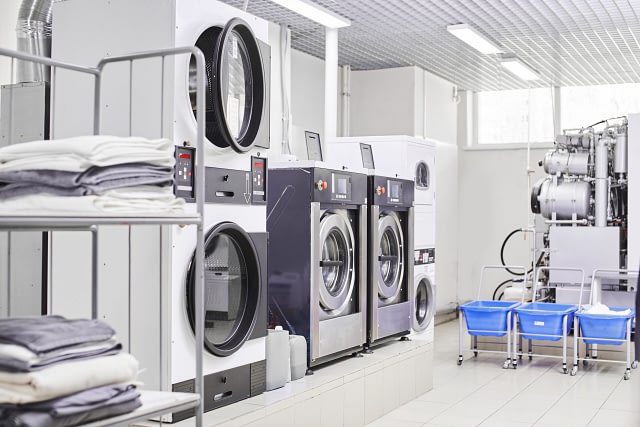
Commercial Washing machine in Care Home

Key challenges at a glance

This guide is intended for laundry professionals in a range of industries, helping them overcome the issues associated with a lack of up-to-date and reliable laundry equipment. Here’s a quick look at topics our experts will be covering:

  • Frequent equipment breakdowns causing operational disruption and emergency repair costs exceeding thousands per incident.
  • Poor wash quality leading to customer complaints, reputational damage, and excessive rewash requirements
  • High energy and water costs from inefficient equipment, consuming 40-50% more resources than commercial alternatives
  • Compliance and hygiene standard violations risking regulatory fines and failed inspections in healthcare and hospitality
  • Limited capacity restricting business growth due to undersized machines, creating bottlenecks during peak demand
  • Excessive staff time spent on maintenance, multiple smaller loads, and manual processes that commercial equipment automates

Table of Contents

6 Common Laundry Challenges Businesses Face Without Proper Equipment

Equipment breakdown and downtime issues

Outdated, inefficient and unsuitable laundry equipment can leave you in a tight spot should things go wrong and faults develop. Whether that’s an old washing machine on its last legs or a domestic tumble dryer being used in place of a business-ready alternative, relying on inadequate laundry equipment can spell trouble for the efficiency of your operations.

Let’s say you manage the laundry room in a busy hotel or perhaps even a care home. You can’t afford for your equipment to let you down, creating periods of downtime that will have a knock-on effect in other areas of your business.

Did you know? Laundry equipment breakdowns, particularly from outdated appliances, cost British businesses an average of £1,840-£5,600 a year in repair costs and associated operational overheads.

Poor wash quality and customer satisfaction

The job of a professional laundry room isn’t simply to process items as quickly as possible. Often, the quality of the final product is just as important as speed and efficiency, particularly for customer-facing businesses like hotels, whose long-term reputation may be at stake.

If you can’t rely on your laundry equipment to deliver high-quality and consistent results, it may be time for an upgrade. Commercial laundry equipment is designed to process high-volume laundry loads without compromising on quality and end results, so you can be sure of great results cycle after cycle.

Did you know? 93% of UK hotel guests said the quality of towels and bedding would affect their decision to return to a hotel. 

High operating costs and inefficiency

It’s impossible to curb operating costs and improve efficiency if your business is reliant on outdated equipment. Old, non-commercial laundry appliances simply aren’t built with long-term efficiency and cost saving in mind, so you could be missing out on a range of modern features and functionality that actively save your business time and money.

For instance, JLA’s range of SMART commercial washing machines integrates a range of intelligent features, each designed to improve performance, boost efficiency, and reduce overall cycle times. Ultimately, making the switch could help you make significant long-term savings, mitigating the cost of updating your laundry room equipment.

Did you know? New commercial laundry equipment can reduce energy consumption by an average of 30%.

Compliance and hygiene standards violations

Businesses reliant on ineffectual laundry equipment could, inadvertently or otherwise, be in breach of compliance and hygiene standard regulations for their industry. Outdated appliances or those not developed for professional use are unlikely to operate within compliant limits, with potentially disastrous consequences for the business at large.

Non-compliant laundry equipment could easily result in the failure of inspections and H&S audits, potentially leading to fiscal penalties or even operational shutdowns. Of course, there’s also the reputational damage to consider, which could prove detrimental in the short and long term.

Did you know? Over one-third of UK businesses may not be fully compliant with fire safety regulations as a result of ineffective laundry equipment.

Capacity limitations restricting growth

Laundry equipment for commercial use is available in a variety of sizes and capacities, ultimately providing total flexibility to scale up your laundry operations as and when required. But what happens when businesses are stymied by equipment that doesn’t afford opportunities to scale up and grow?

We’ve encountered several instances where businesses feel restricted by their current laundry operations, which provide neither present-day efficiency nor scope to kick on and take things to the next level. For instance, guesthouses may be reluctant to open up more guest capacity, simply because they lack the commercial laundry infrastructure to process bigger and more demanding loads.

Did you know? More than half of UK service businesses feel that inefficient laundry processes and high utility costs contribute to restricted business growth. 

Maintenance nightmares and hidden costs

We speak to a lot of UK businesses that have faced disastrous repercussions as a direct result of ineffective laundry equipment. From indefinite periods of downtime to spiralling costs associated with the ongoing repairs and maintenance of tired, scrapheap-ready equipment, your business could be exposed to some major operational challenges if you fail to update your laundry equipment in a timely way.

Of course, businesses with high-demand laundry requirements are most exposed to these kinds of pressures, be it hotels or healthcare facilities. That’s why we encourage long-term thinking when choosing appropriate laundry solutions; an investment today could well make the difference in avoiding maintenance nightmares, hidden costs, and disastrous downtime in the future.

Did you know? Around 68% of hotel laundry equipment failures are caused by preventable maintenance issues, leading to unplanned operational downtime and service disruption. 

6 Common Laundry Challenges Businesses Face Without Proper Equipment

How professional commercial equipment solves these challenges

Rather than relying on ineffective laundry solutions that leave you exposed to the kinds of challenges outlined above, investing in professional commercial laundry equipment is the only way forward.

Business-ready commercial laundry equipment is designed for continuous daily use. Appliances are constructed from durable materials like stainless steel, which reduces downtime and increases expected lifespan. They also integrate state-of-the-art features and functionality that proactively help you to reduce cycle times and save resources, so you get great results without compromising on speed and performance. 

Don’t forget, too, that by investing in commercial laundry equipment from JLA, you get ongoing servicing, maintenance, and full aftercare support. That’s particularly true for our Total Care customers, who receive all-inclusive repairs, servicing, and maintenance to mitigate the impact of equipment downtime.

Real business impact: cost analysis

If you’re a small business with big ambitions for future growth, we appreciate that spending your hard-earned capital on upgrades to your commercial laundry setup may be way down on your list of priorities. But with that said, the numbers speak for themselves when it comes to the potential savings that can stem from commercial laundry room upgrades, as this chart shows

Cost category

Inadequate equipment

Proper commercial equipment

Annual energy costs

Baseline

25-35% reduction

Annual water costs

Baseline

40-50% reduction

Emergency repairs

£4,000-£12,000 per incident

Included in service contract

Equipment lifespan

5-7 years

10-15 years

Downtime per year

Multiple incidents

Minimal with preventive maintenance

Compliance risk

High

Managed

Labour efficiency

Multiple small loads

Fewer large loads

ROI timeline when investing in new commercial laundry equipment

When you’ve made the switch to new laundry equipment, you want to know when you can expect a return on your investment. Of course, you need to factor before-and-after running and maintenance costs into account here, as well as the cost of buying or renting new commercial laundry equipment from JLA.

Usually, the businesses we work with achieve break-even within 2-5 years of procuring new laundry equipment. Of course, that is dependent on operational size, utilisation, and cost savings from reduced downtime, utilities, and maintenance, so consider this a rough ballpark.

Taking action to overcome laundry challenges

Downtime, delays, drops in productivity, and the potential to fall foul of compliance-related issues are all problems that businesses could face if they fail to update their on-premises laundry equipment. Of course, we shouldn’t forget cost-related factors, too, with resource wastage, ongoing maintenance, and poor overall efficiency posing a serious risk to your business’s long-term profitability.

By upgrading your commercial laundry equipment with JLA, you can solve all these challenges and scale up your on-site operations in the process. If you’re ready to take action and get started, get in touch with our experts today on 0808 239 7578, and we’ll be happy to help.

 FAQs

What’s the difference between domestic and commercial laundry equipment?

There are significant differences between laundry equipment that’s designed for business as opposed to domestic use. From size and capacity to the internal components and materials used, you can learn more about why commercial laundry equipment is far superior to domestic counterparts in our full commercial vs domestic laundry equipment guide.

How much can businesses save by upgrading to proper equipment?

There’s no easy way to put a figure on the potential savings that could come from upgrading your laundry equipment. However, it’s widely held that, while making the switch may require some upfront investment and outlay, the long-term cost savings will significantly outweigh these overheads within the space of around five years.

What compliance standards must commercial laundry equipment meet?

There are a variety of compliance-related standards that commercial launderers must consider when kitting out their on-premises laundry suite. For instance, some regulations concern fire prevention, while others, particularly in the care sector, govern benchmark hygiene standards. Of course, the compliance standards you’re bound to will differ depending on your industry sector.

How do you calculate the right capacity for your business?

The right laundry capacity for your business will, of course, depend on your industry sector. For instance, hotels, care homes, hospitals, and other such organisations will have significantly higher laundry demands than, say, hair salons, so you’ll need to consider your industry, along with your ambitions for future growth and scaling.

What should you look for in a commercial laundry service provider?

Not only should you find a commercial laundry provider that offers innovative, efficiency-boosting solutions, but also those with value-add services like 24/7 help and support, flexible servicing and maintenance plans, and a network of nationwide engineers that offer speedy same-day callouts.

How long does commercial laundry equipment typically last?

Modern commercial laundry equipment has a typical lifespan of around 15+ years, assuming that recommended servicing and maintenance schedules are properly adhered to. 


George Barclay

Laundry expert

Since joining JLA as an apprentice engineer in 2011, George has built extensive hands-on experience across plumbing, electrical and mechanical engineering, and now oversees laundry design and project delivery as our Head of Installations.

George’s career progression has given him detailed knowledge of commercial laundry operations, from on-site practicalities to meeting compliance standards. He is Gas Safe and COMCAT 1, 2, 3 and 5-qualified , and holds IOSH Managing Safety and 18th Edition accreditation.

From new laundry rooms to existing site upgrades, George’s expertise ensures that every project is completed safely, efficiently and with minimal disruption, so that operations can perform reliably from day one.

Recent Posts

  • UK Fire Door Regulations: A Complete Guide 2026 Update
  • How a £200 Fire Detector Can Protect £200 Million in Assets: The Ultimate ROI Guide
  • 6 Common Laundry Challenges Businesses Face Without Proper Equipment
  • Why Domestic Machines Are Not Suitable for Care Homes: Critical Risks and Compliance Issues
  • Large Capacity Commercial Washing Machines

Recent Comments

    Archives

    • June 2026
    • May 2026
    • April 2026
    • March 2026
    • February 2026
    • January 2026
    • December 2025
    • November 2025
    • October 2025
    • September 2025
    • August 2025
    • July 2025
    • June 2025
    • May 2025
    • April 2025
    • March 2025
    • February 2025
    • January 2025
    • December 2024
    • November 2024
    • October 2024
    • September 2024
    • August 2024
    • July 2024
    • June 2024
    • May 2024
    • April 2024
    • March 2024
    • February 2024
    • January 2024
    • December 2023
    • November 2023
    • October 2023
    • September 2023
    • August 2023
    • July 2023
    • June 2023
    • May 2023
    • April 2023
    • March 2023
    • February 2023
    • January 2023
    • November 2022
    • October 2022
    • September 2022
    • July 2022
    • June 2022
    • May 2022
    • April 2022
    • March 2022
    • December 2021
    • April 2021
    • February 2021
    • January 2021
    • December 2020
    • November 2020
    • October 2020
    • September 2020
    • August 2020
    • July 2020
    • June 2020
    • May 2020
    • February 2020
    • November 2019
    • October 2019
    • September 2019
    • July 2019
    • May 2019
    • April 2019
    • March 2019
    • January 2019
    • September 2018
    • May 2018
    • October 2017
    • August 2017
    • May 2017
    • April 2017
    • March 2017
    • August 2016
    • May 2016
    • March 2016
    • February 2016
    • August 2015
    • July 2015
    • June 2015
    • May 2015
    • March 2015
    • January 2015
    • November 2014
    • May 2014

    Categories

    • Catering
    • Energy saving
    • Fire safety
    • General
    • HVAC
    • Hygiene
    • Laundry
    • Testimonials

    Meta

    • Log in
    • Entries feed
    • Comments feed
    • WordPress.org
    Need help? Call us on

    01422822282

    Facebook Linkedin
    PQAL & Black on White UKAS 27001 Logo
    Cyber Essentials Plus Certified
    About JLA
    • Who we are
    • Careers
    • ESG at JLA
    • Accreditations
    • Blog
    • Total Care from JLA
    • Testimonials
    • Who we are
    • Careers
    • ESG at JLA
    • Accreditations
    • Blog
    • Total Care from JLA
    • Testimonials
    Solutions
    • Commercial laundry equipment
    • Catering equipment
    • HVAC
    • Fire safety
    • Infection Control
    • Commercial laundry equipment
    • Catering equipment
    • HVAC
    • Fire safety
    • Infection Control
    Sectors
    • Care Homes
    • NHS & Healthcare
    • Health clubs
    • Holiday parks
    • Hospitality
    • Hotels & spas
    • Housing
    • Facilities management
    • Football clubs
    • Pubs & restaurants
    • Equine and Stables
    • Vets & animal care
    • More sectors
    • Care Homes
    • NHS & Healthcare
    • Health clubs
    • Holiday parks
    • Hospitality
    • Hotels & spas
    • Housing
    • Facilities management
    • Football clubs
    • Pubs & restaurants
    • Equine and Stables
    • Vets & animal care
    • More sectors
    • Privacy & cookies
    • Terms & conditions
    • Modern slavery
    • Covid-19
    • Responsibility
    • Site map
    • Privacy & cookies
    • Terms & conditions
    • Modern slavery
    • Covid-19
    • Responsibility
    • Site map

    Get my quote

    By clicking Get my quote, you agree to the Terms and Conditions set out by this site, including our Privacy Policy

    Mark Bone headshot

    Mark Bone

    Fire safety expert

    With an extensive technical background, Mark advises customers with his wealth of fire safety and security knowledge. His experience spans technical, commercial, customer service and operational roles delivering a well-rounded service for JLA clients.

    Read Mark's full profile
    George Barclay

    George Barclay

    Laundry Expert

    Head of Installations George joined JLA as an apprentice service engineer in 2011. With years of experience in plumbing, engineering, electrical and mechanical engineering, he oversees the delivery of safe, compliant installations.

    George is Gas qualified for both laundry and COMCAT 1, 2, 3, 5, and holds IOSH Managing Safety and 17th edition accreditation.

    Read George's full profile

    Get my quote

    By clicking Get my quote, you agree to the Terms and Conditions set out by this site, including our Privacy Policy